By Christian Agape (Editor in Chief)
What Is a JRPG? How Mechanics, Story, and Art Define the Genre
A JRPG is a design tradition, not a passport stamp: authored stories, a distinct party, structured combat, and an upgrade loop. Here is how to read the genre and pick a way in.

Image credit: Play This JRPG
If you have asked "what is a JRPG game," here is the clear answer: it is a story-driven role-playing experience built around authored narratives, a cast of distinct party members, structured combat, and character progression rooted in Japanese console design traditions. The label describes a recognizable design philosophy, not simply a geographic passport. A game built in France can strongly resemble a JRPG in spirit, while a Japanese-developed action RPG can read as closer to Western design sensibilities. That ambiguity is part of what makes the genre so fascinating to think about.
The genre is also far broader than most newcomers expect. It ranges from slow, deliberate turn-based adventures where every command is a chess move to real-time action combat layered over deep RPG systems. At Play This JRPG, our catalog holds 3,488 games across every major platform, and the sheer scale of that number shows how much ground the genre covers. Learning its grammar is the first step toward finding your place within it.
Key takeaways
- Genre, not geography. "JRPG" describes a design tradition centered on authored stories, party-based combat, and structured progression, not just games developed in Japan.
- Two main combat schools. Turn-based (command menu) and action (real-time) combat are both fully established variants within the genre.
- Story is structured. JRPGs typically present a defined protagonist with a fixed dramatic arc, unlike most Western RPGs where the player constructs their own story.
- The upgrade loop is central. Fight, earn experience, level up, equip better gear, challenge stronger enemies. Modern games layer skill trees and social systems on top without abandoning it.
- English support matters. Many Japanese-developed RPGs never receive official localization, making an English-language filter essential for English-speaking players.
- Combat style is your best starting filter. Choosing between turn-based and action combat narrows a library of more than 3,400 titles to a manageable shortlist fast.
Where did the term "JRPG" actually come from?
"JRPG" was not coined in Japan. It emerged in early American online gaming communities around 1992, used to separate Japanese console RPGs from Western computer RPGs. The distinction was cultural and structural: Japanese console design emphasized authored stories and accessible menus, while Western computer RPGs emphasized systemic worlds and player-constructed characters. Japan never widely adopted the term domestically, and it remained largely an overseas label.
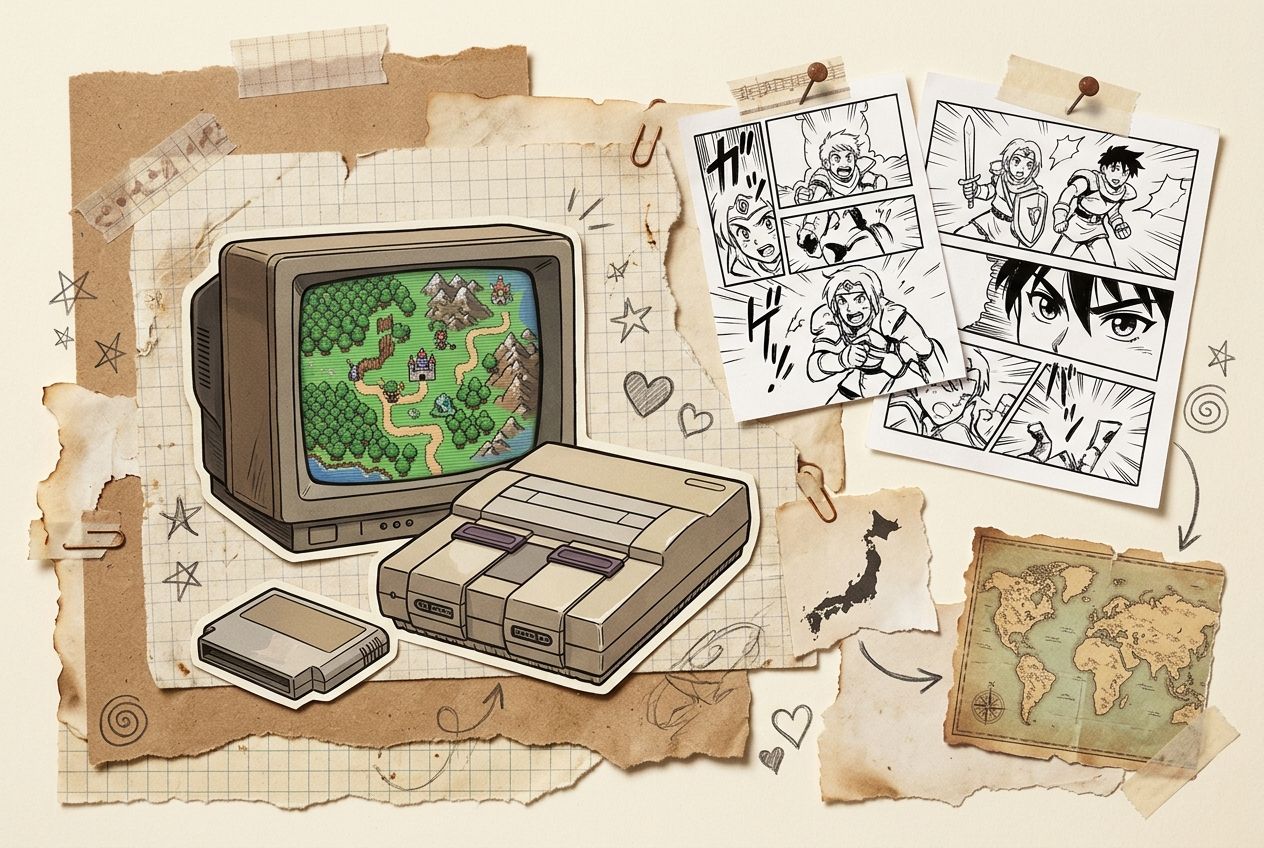
The design tradition the label describes is older than the label itself. Dragon Quest (1986) synthesized ideas from Western computer RPGs like Wizardry and Ultima with manga aesthetics and console-friendly structure. It established the foundational grammar: overworld exploration, towns, dungeons, menu-based combat, and experience-point progression. That grammar is what "JRPG" actually points to, which is why the label still generates debate. Final Fantasy XIV director Naoki Yoshida has publicly questioned whether the term remains useful, and the argument has merit: when a French studio produces a game that plays identically to a Persona title, geographic origin starts to feel like the wrong axis entirely.
What is a JRPG game? The mechanics that show up in almost every entry
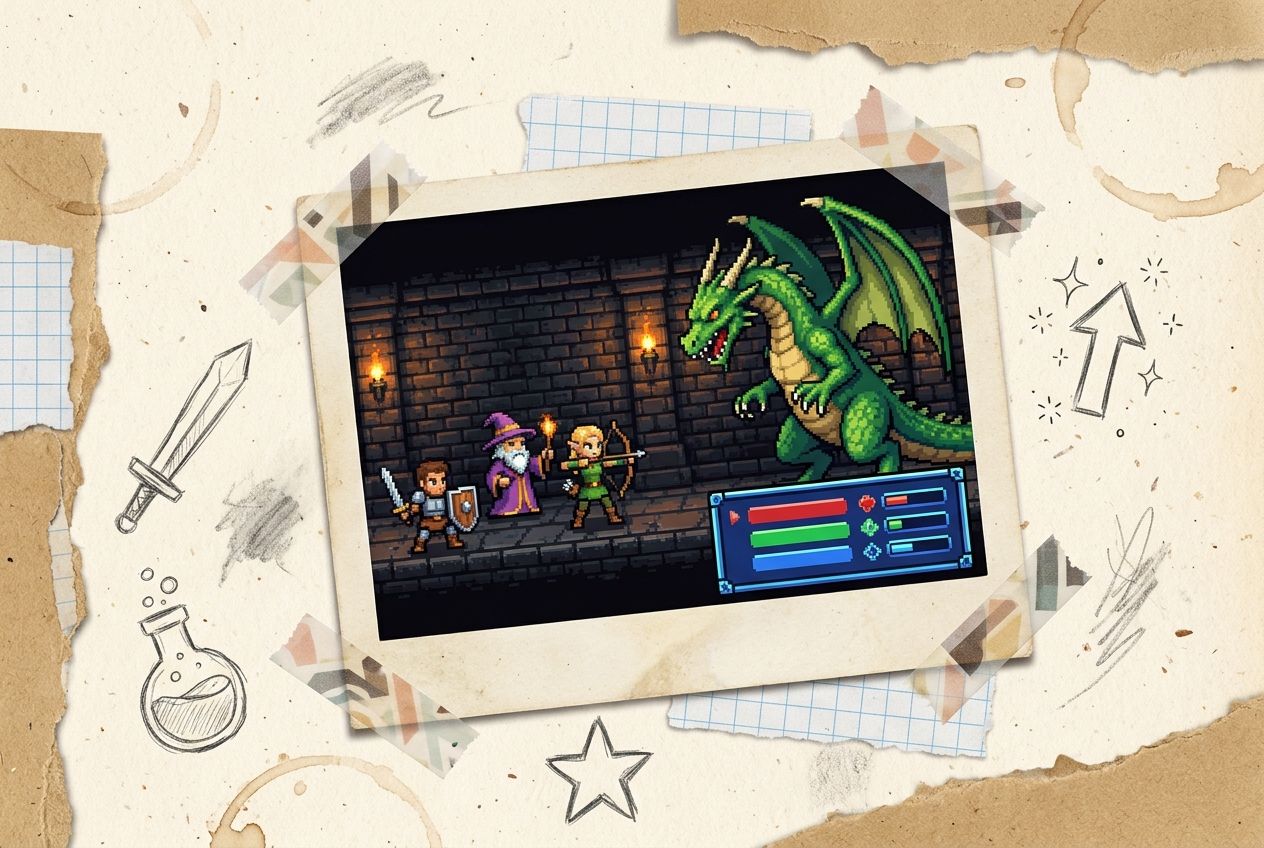
The mechanical fingerprint of the genre starts with combat. Classic turn-based systems ask players to choose commands, with characters acting in sequence. Active Time Battle, demonstrated across the Final Fantasy series through its filling ATB gauge, adds urgency to that menu structure without going fully real-time. Persona 5 is a prominent contemporary example of modern turn-based JRPG design, while Final Fantasy XVI represents a highly action-oriented approach at the opposite end of the spectrum. All three are recognizably JRPGs. Combat style is a spectrum within the genre, not a dividing wall.
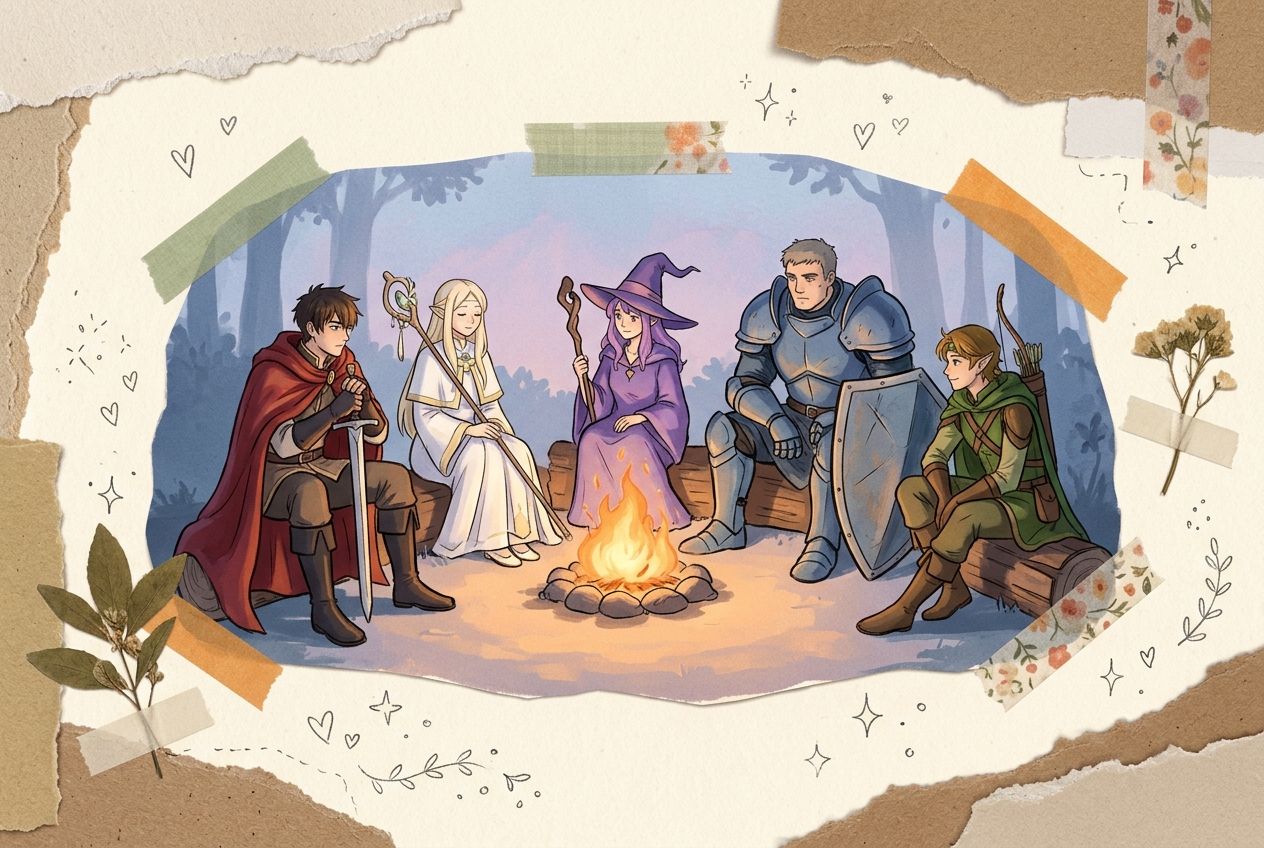
Party systems give the genre much of its strategic and emotional depth. JRPGs typically assemble a cast with deliberately different capabilities: attacker, healer, mage, tank, support. Party composition and character switching become real decisions, and the relationships between those characters often carry as much weight as the plot itself. This is a key structural contrast with most Western RPGs, where a single customizable avatar anchors the experience rather than an ensemble.
Underneath both combat styles runs the same core upgrade loop: fight enemies, earn experience and currency, level up, unlock abilities, equip better gear, then face stronger enemies and advance the story. Modern JRPGs layer elemental weaknesses, status effects, skill trees, social systems, and crafting on top of this cycle without abandoning it. The loop is the genre's skeleton. Everything else is muscle and sinew.
How does a JRPG tell its story differently from a Western RPG?
The sharpest distinction between the two traditions is the difference between a story told to you and a story constructed by you. A typical JRPG gives you a defined protagonist, such as Cloud Strife, Joker from Persona 5, or Rex from Xenoblade Chronicles 2, each with their own personality, voice, and emotional arc. You guide that character through a fixed dramatic journey. A typical Western RPG gives you a customizable avatar to name, build, and role-play. Neither approach is superior. They serve genuinely different creative intentions.
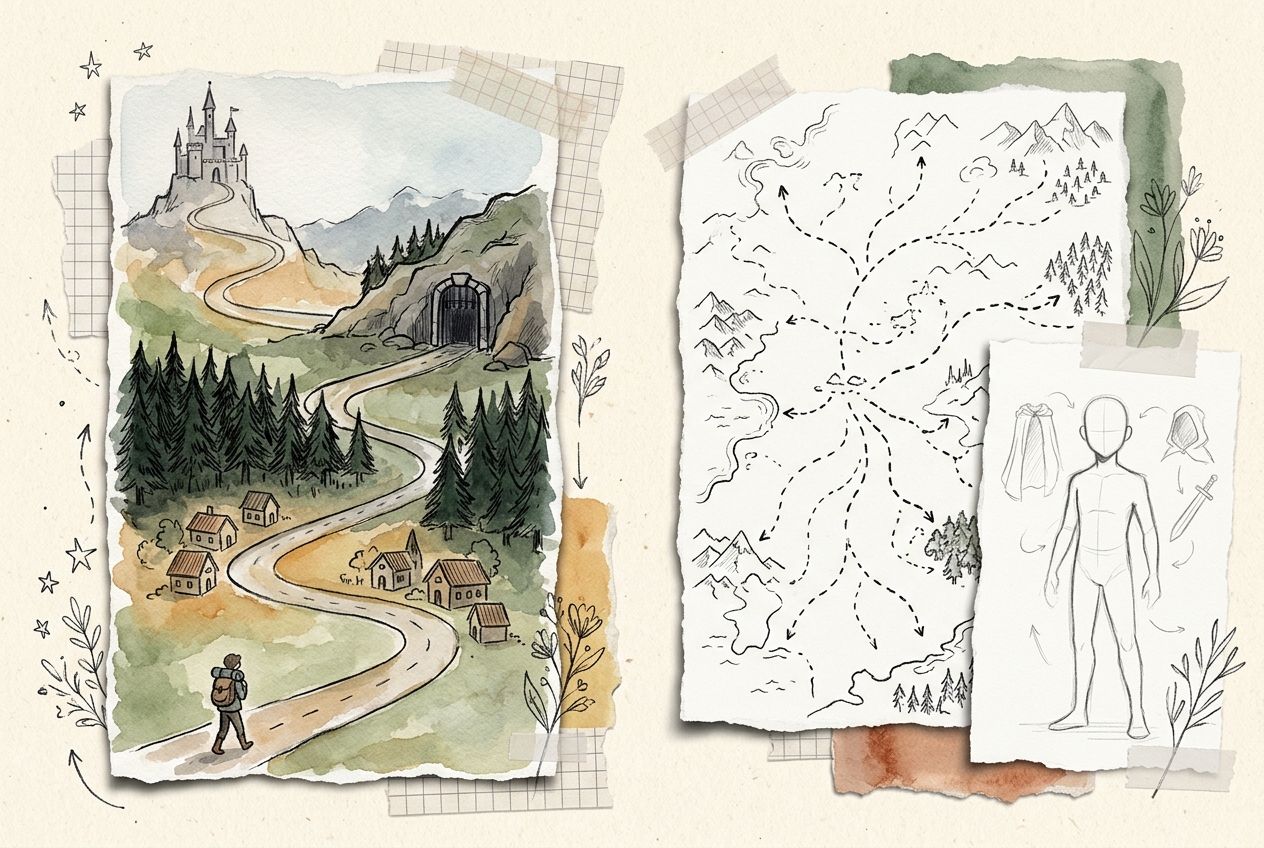
Classic JRPGs moved players through a planned sequence of chapters and dungeons, with the world opening gradually as the story permitted. Modern JRPGs increasingly blend that authored structure with large explorable zones, as seen in Xenoblade Chronicles, Final Fantasy XVI's open regions, and Final Fantasy VII Rebirth's sprawling maps. The story remains the spine even when exploration expands around it. These are design tendencies, not absolute rules, and the table below makes the contrast concrete.
| Dimension | Common JRPG tendency | Common Western RPG tendency |
|---|---|---|
| Player character | Predefined protagonist with their own arc | Customizable avatar, player-named and built |
| Party | Fixed cast with character-driven relationships | Flexible companions or solo player build |
| Story structure | Linear or chapter-based, heavily authored | Branching, choice-driven, variable outcomes |
| Combat | Turn-based, ATB, or stylized action RPG systems | Real-time with pause, systemic sandbox combat |
| Visual style | Anime-influenced, colorful, expressive | Often realistic, gritty, or naturalistic |
| World structure | Guided progression with optional side content | Open-ended exploration and faction systems |
Dark Souls is Japanese-made but reads as a Western RPG to most players. Clair Obscur: Expedition 33 was built in France but strongly resembles JRPG design conventions. The label has always been about design culture more than national borders, and that tension is what keeps the conversation alive.
Classic and modern JRPGs worth knowing, organized by combat style
Organizing the genre by combat style is more useful than a flat historical list, because it immediately tells you which direction suits you personally.
Turn-based JRPGs are where the genre began and where it still thrives. Dragon Quest XI is a widely recommended and accessible modern example of classic command-based combat. Persona 5 Royal represents a stylistic high point of the turn-based school, fusing dungeon-crawling with a school-life social calendar and one of the most distinctive visual identities in the medium. Metaphor: ReFantazio has received strong critical attention as a recent entry in the same tradition. For historical reference, Final Fantasy VI and Chrono Trigger remain the 16-bit benchmarks that show what the genre perfected in its golden era.
Action JRPGs proved that real-time combat and deep RPG storytelling could coexist without either element suffering. Kingdom Hearts popularized action-RPG mechanics for a large console audience. Final Fantasy VII Rebirth is a recent high-profile example of spectacle-driven action RPG design. NieR: Automata blends bullet-hell mechanics, action combat, and philosophical storytelling into something genuinely unusual. Our action JRPG hub covers 516 titles across all major platforms, which gives you a sense of how fully established this branch has become.
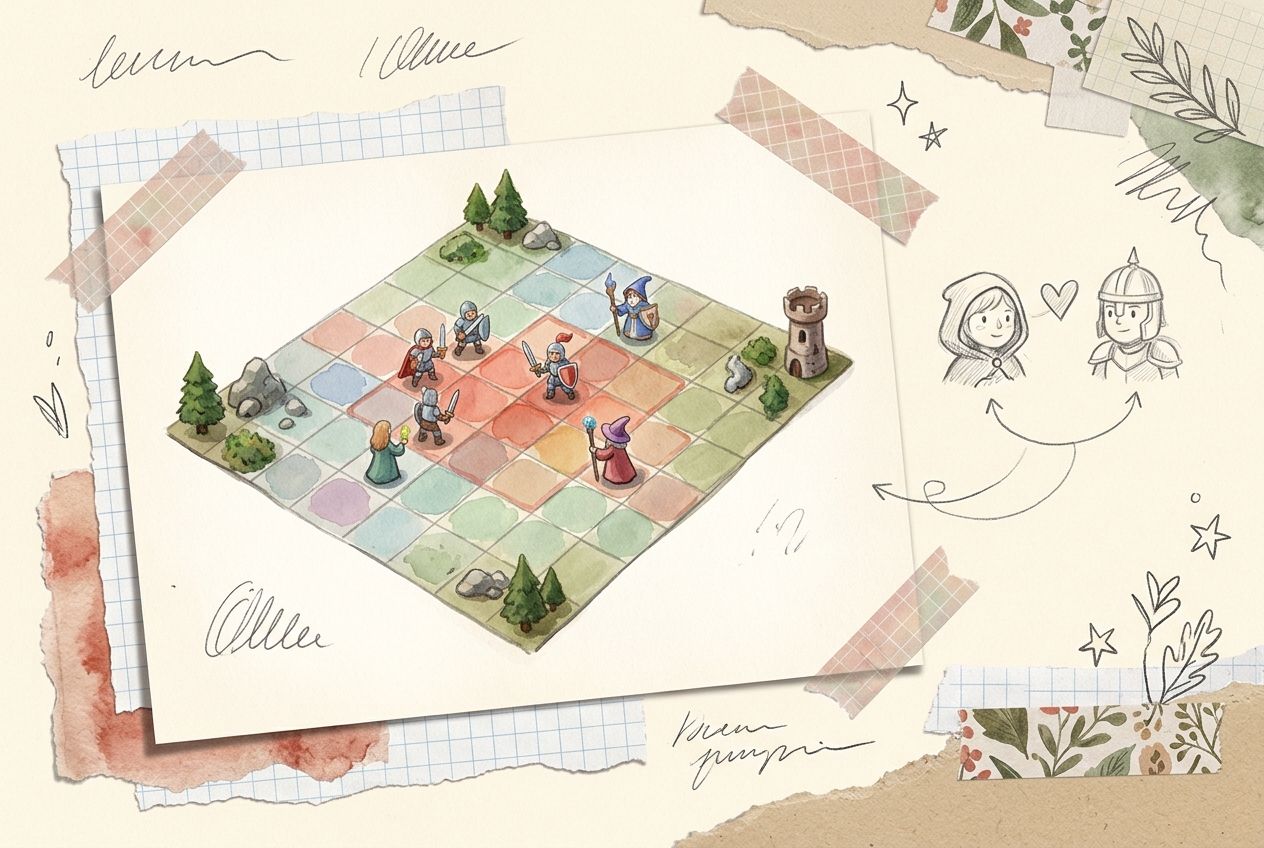
Tactical JRPGs reward players who want more strategy layered into their combat. Fire Emblem: Three Houses blends grid-based battles with social relationship systems that feed directly into those battles. Triangle Strategy and Unicorn Overlord offer pure tactics without the social calendar. Hybrid designs, such as Final Fantasy XII's Gambit system or the MMO-style real-time battles of Xenoblade Chronicles, occupy a middle space worth exploring if traditional turn-based play feels too slow and pure action feels too shallow.
How do you find a JRPG game that actually fits what you want?
The genre's greatest strength, its diversity, is also its biggest navigation problem for newcomers. More than three thousand titles with no obvious map is genuinely overwhelming. The solution is to filter before you browse, not after.
Start with two questions: do you want turn-based strategy or real-time action, and what platform do you own? That two-step filter eliminates the vast majority of the catalog and leaves a manageable shortlist. From there, story tone and setting narrow things further. You do not need to read every review. You need the right filters applied to the right database.
That is exactly what we built Play This JRPG to solve. Our database covers 3,488 games filterable by combat style, platform, release status, and English language support. The combat style hubs alone list 2,595 turn-based and 516 action entries, plus 382 tactical ones, and many titles carry more than one label. For English-speaking players, the English support hub addresses one of the most frustrating friction points in the genre, buying a game only to discover it was never localized, and covers 1,340 games with confirmed English support. Collectors can check the physical editions hub, which lists 2,588 games. The weekly newsletter handles the ongoing side of things: one game recommendation and release notes delivered weekly, no account required.
What is a JRPG game? The genre has a grammar worth learning
At its core, a JRPG game is a story-driven role-playing experience shaped by Japanese design traditions, built around a cast of characters, structured combat, and a progression system that rewards persistence. That definition is broad by design. Turn-based purists and action RPG fans inhabit the same label without contradiction, and that coexistence is a sign of a genre with real range rather than one that has lost its identity.
The tropes that define JRPG storytelling are the chosen youth whose quiet life is shattered, the ragtag party that becomes a surrogate family, and the corrupt empire concealing a cosmic truth. They are not weaknesses. They are a shared grammar that allows developers to subvert, deepen, and reinvent expectations. The games that become classics are usually the ones that know the rules well enough to break them with purpose.
If you know what you are looking for, the genre has thousands of entry points waiting. Browse the database at Play This JRPG, apply the combat style and platform filters, confirm English support, and check for physical editions if that matters to you. The right JRPG for you exists. Finding it is simply a matter of knowing which questions to ask first.
Keep exploring
- Turn-based JRPGs: command-menu combat at your own pace.
- Action JRPGs: real-time combat with RPG progression.
- Tactical JRPGs: grids, positioning, and squad tactics.
- JRPGs with confirmed English support
- JRPG physical editions
- Release calendar and the full game catalog
Frequently asked questions
Can a game made outside Japan still be a JRPG?
Yes. A game made outside Japan can strongly resemble a JRPG in spirit. Design culture, not nationality, is the defining axis. Clair Obscur: Expedition 33 was built in France but strongly resembles JRPG design conventions, and the label often describes a shared design grammar rather than geographic origin.
How should I choose between turn-based and action combat when starting my search?
Start by picking the combat style you prefer, because it narrows the catalog fastest. Turn-based and action are the two main schools, and choosing between them reduces a catalog of more than 3,400 games to a much more manageable shortlist. Our turn-based and action hubs are the best places to begin.
How many JRPGs are there and does Play This JRPG track them?
Our catalog currently lists 3,488 published games. We break the collection down by combat style (2,595 turn-based, 516 action, and 382 tactical, with overlap), by English support (1,340 games), and by physical editions (2,588 games).
How important is English localization when buying a JRPG?
English localization is important because many Japanese-developed RPGs never receive official localization. We provide an English-language filter for this reason and list 1,340 games with confirmed English support, so you can avoid buying a game that was never localized.