By Christian Agape (Editor in Chief)
Which Final Fantasy V Version Should You Play?
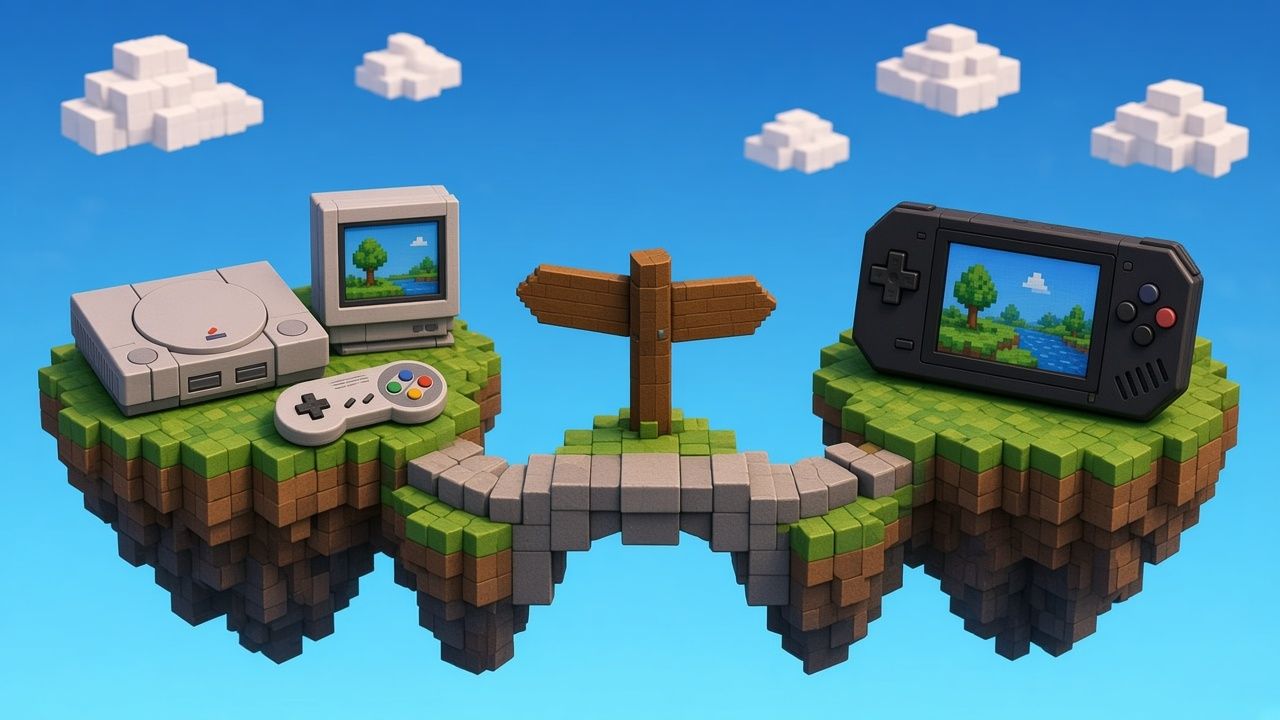
Final Fantasy V is two official games. Pixel Remaster sells the 1992 campaign with new pixels and boost toggles. Advance, and the delisted 2013 and 2015 ports, adds four jobs and the Sealed Temple.

Image credit: Play This JRPG
Open Final Fantasy V on any official release and the opening hour is the same story: a wind shrine, four travelers, and a job you can drop the moment a better ability is learned. The releases split after the ending. One family stops where Square stopped on December 6, 1992. The other keeps going, into the Sealed Temple, four jobs that did not exist on Super Famicom, and a superboss named Enuo. The console on the box is the smaller decision. The campaign you actually finish is the real one.
The longer campaign is Final Fantasy V Advance on Game Boy Advance, and the 2013 phone port and 2015 Steam port built from it. Square Enix took those off the shelf when the Pixel Remaster shipped. The remaster on sale now is a new production of the 1992 game, which Square Enix says in the store text itself.

Two product lines, not five machines
A list that treats Super Famicom, PlayStation, Game Boy Advance, PSP, and Steam as five different games overcounts the forks. Several of those names are one game in a new case.
The 1992 line is the Japanese Super Famicom cartridge, the PlayStation port, the 2011 PSP and PS3 download of that port, and the Pixel Remaster. None of them include the Advance extras. The Advance line is the 2006 Game Boy Advance cartridge, an iOS release on March 28, 2013, an Android release that September, and a Steam release on September 24, 2015. Those later ports keep the temple, Enuo, and the four added jobs. They also throw out the GBA sprites. Kazuko Shibuya, the original pixel artist, redrew the characters at a higher resolution. The phone and old Steam versions are not a GBA cartridge running on a backlight.
PSP is the name readers are most likely to file in the wrong drawer. On November 22, 2011, Square Enix released Final Fantasy V on the PlayStation Network for PS3 and PSP, at a $9.99 list price. The announcement describes the PlayStation version, the one North America first received inside Final Fantasy Anthology, now downloadable on the handheld. It is not a new remake, and it is not Advance.
What Advance added, and where that content went
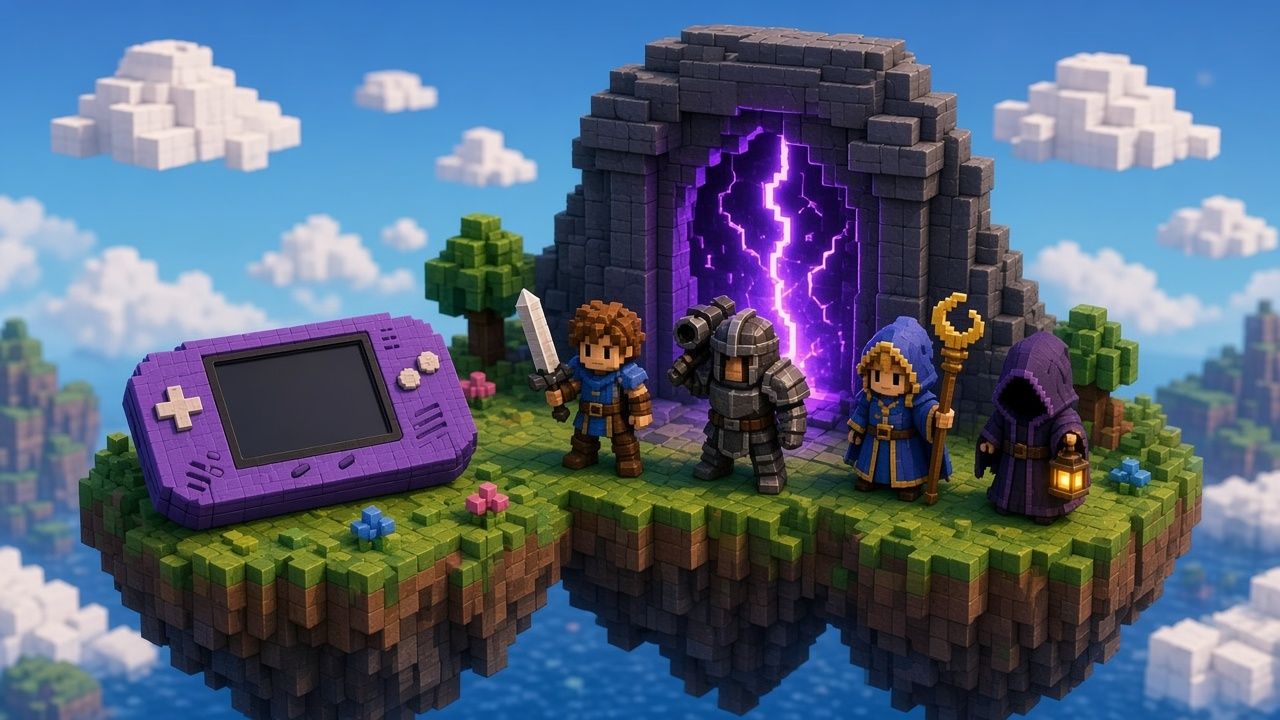
Advance is the content-complete official edition. Japan received it on October 12, 2006, North America on November 6, 2006, and Europe on April 20, 2007. It adds Gladiator, Cannoneer, Oracle, and Necromancer, which takes the job list from 22 to 26. It adds the Sealed Temple and Enuo, an optional boss designed by Tetsuya Nomura, who had designed monsters for the original. A bestiary, a quick save, and a new English script come with that cartridge.
Square Enix did not treat those extras as a GBA footnote. The old Steam store page, the app Square Enix later labeled "FINAL FANTASY V (Old ver.)," still describes 26 job classes, Shibuya's redrawn graphics, the Sealed Temple from the 2006 release, and Enuo. The same page tells new buyers the game would no longer be sold after July 27, 2021, and points them at the pixel remaster that was then on the way. The September 24, 2015 launch note put that same dungeon and boss on PC at a $15.99 launch price.
The Steam notice closes new purchases. People who already bought the 2015 app still have that library copy. A new player cannot buy this package from Square Enix anymore. A used Advance cartridge is the other copy still in circulation. The 2013 release remains its own catalog record, and it should be read as that delisted Advance-content port, not as another Pixel Remaster.
What the Pixel Remaster actually sells
The Final Fantasy V on current stores is the Pixel Remaster. Steam, iOS, and Android received it on November 10, 2021. PlayStation 4 and Nintendo Switch followed on April 19, 2023. Xbox Series X|S, and a PC build on the Microsoft Store, followed on September 26, 2024. Square Enix's series announcement lists those platforms together: PlayStation 4, Switch, Xbox Series X|S, Steam, iOS, and Android.
The current Steam listing, app 1173810, is plain about the production. The sprites are new 2D pixel art, including character art by Kazuko Shibuya. The score is a rearrangement overseen by Nobuo Uematsu, with a switch back to playback meant to capture the original. The menu adds auto-battle, a font option, a bestiary, an illustration gallery, and a music player. Boosts go further than a difficulty toggle: random encounters can be switched off, and experience and ABP multipliers can be set anywhere from 0 to 4. Under that feature list, Square Enix writes that the remaster is based on the 1992 game, and that features may differ from earlier rereleases. The series bundle text is blunter: extra elements from other remakes are not included.
The price is not one figure. On November 15, 2026 (Japan time), the US Steam store listed this edition at $17.99 with no discount, and the US App Store listed the iOS edition at $14.99. The Xbox Series launch price reported in September 2024 was also $17.99. PlayStation 4 and Switch prices move with sales, so the live store page beats any number printed in a guide.

Super Famicom, Anthology, and the load times
The Super Famicom cartridge is a Japanese release. Square did not publish an official English script until Final Fantasy Anthology on PlayStation, out in North America on October 5, 1999, almost seven years after the Super Famicom launch. Europe's Anthology followed on March 1, 2002. The Japanese PlayStation port is older than either of those: March 19, 1998, in a collection with Final Fantasy IV and VI. That port added opening and ending movies and a memo save. The campaign underneath is the 1992 one.
The first official English script was the weak part of Anthology, not a hidden strength. GameSpot's review on September 30, 1999 called the translation poor and said existing fan translations had already done better. Advance replaced that script with a new translation. English players are choosing among no official text on Super Famicom, the Anthology wording, and the translation Advance introduced. The Pixel Remaster is the current official English release. It is not a project to restore the 1999 script.
Anthology also became the version people remember for load times. PlayStation 2 added a separate fault on the original North American disc: Sony reported that the Final Fantasy V half could garble the save screen. Square said the save itself still worked, and the display was corrected on the PAL disc and the Greatest Hits reprint. None of that baggage is a reason to buy the port in 2026. It is a reason the PSP download, which is that port, is a curiosity rather than a recommendation. The Super Famicom cartridge is the other direction: original SPC audio, original balance, and the bugs later builds closed. Pixel Remaster can switch between Uematsu's new arrangement and an original-style track, which is the official way to hear the old score on a machine you can buy. It is still a new program. Routes and glitches written for the 1992 cartridge belong to that cartridge.
Jobs are why the edition matters
The rule is stable across every release, which is why Final Fantasy V sits at the center of the Final Fantasy job experiments. A character starts as a Freelancer. Crystal shards open jobs. An ability learned on one job can be equipped after you switch, so the system is a kit, not a class lock. Blue magic is the ability that punishes a late start: the spell is learned when an enemy casts it on a character who can learn it, and many of those casts show up in specific fights. Thief's walking-speed ability, Sprint in the later English scripts, is the other early pickup, because it stays useful on every job after it. Mime is already in the 1992 list. It is not one of the four Advance additions, and hunting it in the Pixel Remaster is not a sign that the bonus jobs were hidden.
A first clear does not need a solved party. One physical job, a white mage who can later learn time magic, a black mage, and someone learning blue magic will finish the 1992 story on any release. What changes is the cost of experimenting. On Pixel Remaster the Steam page lets you multiply ABP from 0 to 4, so sampling jobs is a setting rather than a grind. Advance has no equivalent menu. Its offer is the other four jobs at the end of the list. An endgame plan that wants Gladiator, Cannoneer, Oracle, or Necromancer has one legal home, and the remaster is not it.
Where each edition stands
| Edition | First release | English script | Advance extras | Sold new now |
|---|---|---|---|---|
| Super Famicom | December 6, 1992, Japan | None official | No | No |
| PlayStation, later PSP and PS3 | March 19, 1998 in Japan; October 5, 1999 in North America | Anthology translation | No | No current PS4 or PS5 listing |
| Game Boy Advance | October 12, 2006 in Japan; November 6, 2006 in North America | New translation | Yes: four jobs, Sealed Temple, Enuo | Used cartridge |
| 2013 mobile and 2015 Steam | March 28, 2013 on iOS; September 24, 2015 on Steam | Later script, redrawn sprites | Yes: 26 jobs, Sealed Temple, Enuo | Closed to new buyers after July 27, 2021 on Steam |
| Pixel Remaster | November 10, 2021 on PC and mobile; April 19, 2023 on PS4 and Switch; September 26, 2024 on Xbox Series | Later script | No | Yes |
Match the edition to the goal
You want to start this week
Buy the Pixel Remaster. It is the full 1992 story, with Shibuya's new pixels, Uematsu's arranged score and an original-style toggle, and a boost menu that can silence random encounters. It does not include the temple or the four extra jobs. For a first playthrough, it is the copy with the least setup and the script worth reading. The catalog page collects that current multiplatform release, including Steam Deck playable status.
You already know how the 1992 story ends
Advance is the edition that still has somewhere to go. The four jobs and Enuo are the postgame Square published, and the remaster left them behind on purpose. A used Game Boy Advance cartridge is the copy you can still shop for. If you already own the 2013 or 2015 download, that library copy is the same content without another purchase. Do not wait for Square Enix to put it back on a store page.
You want the 1992 object
The Super Famicom cartridge is that object: Japanese text, the SPC score as shipped, and the original rules, bugs included. Pixel Remaster restores the campaign for a current screen. It does not play the cartridge. Anthology and the PSP download sit in between, with official English of the older kind and the pacing of a PlayStation port.
Frequently asked questions
Does the Pixel Remaster include the Sealed Temple?
No. Square Enix built it from the 1992 game and left the Advance additions out. Gladiator, Cannoneer, Oracle, Necromancer, the Sealed Temple, and Enuo are on the Game Boy Advance cartridge and on the 2013 and 2015 ports, which are closed to new buyers.
Is the PSP version its own Final Fantasy V?
No. The November 22, 2011 PlayStation Network release is the PlayStation port, sold for PSP and PS3. It includes the movies from that port. It does not include the Advance jobs or dungeon, and Square Enix does not sell it as a PlayStation 4 or PlayStation 5 game.
Which English script is the one to read?
Advance, for the translation that replaced Anthology, or the Pixel Remaster, for the English release Square Enix still sells. GameSpot treated the Anthology script as the weak part of that package. The Super Famicom cartridge has no official English text.
Will Super Famicom tricks work on the Pixel Remaster?
Do not plan on it. The remaster is a new build of the 1992 campaign, with its own bug fixes and a boost menu the cartridge never had. Glitch routes written for Super Famicom stay with that cartridge.
The campaign, or the temple
The job system is intact on every release in the table, which is why any of them can show you why this entry has the reputation it has. The purchase is narrower than a five-console argument. Buy the Pixel Remaster for the 1992 story on a current machine. Track down Advance, or the delisted port you already own, if the Sealed Temple is the reason you are here. Keep the Super Famicom cartridge if the original rules are the reason. The other boxes are older packaging for one of those three.
Sources
- FINAL FANTASY V on Steam (Pixel Remaster, app 1173810) — Square Enix
- FINAL FANTASY V (Old ver.) on Steam (app 382890) — Square Enix
- FINAL FANTASY V launches on PC today — Square Enix
- FINAL FANTASY V now available on PlayStation Network — Square Enix
- FINAL FANTASY Pixel Remaster series on PS4, Nintendo Switch, Xbox Series X|S and PC — Square Enix
- Final Fantasy Pixel Remaster series now available for Xbox Series — Gematsu
- FINAL FANTASY V for iOS — Apple App Store
- Final Fantasy V — Wikipedia
- Final Fantasy Anthology review — GameSpot